
Se encuentra usted aquí
Agregador de canales de noticias
Las ventas del sector servicios suben un 21,7% en junio, con la hostelería liderando los ascensos
El sector servicios disparó su facturación un 21,7% en junio respecto al mismo mes de 2020, si bien esta tasa se ha moderado en más de 17 puntos respecto a mayo y en más de 36 puntos respecto a abril, cuando se registró la mayor alza de la serie histórica, según ha informado este lunes […]
La entrada Las ventas del sector servicios suben un 21,7% en junio, con la hostelería liderando los ascensos se publicó primero en {DF} DiarioFinanciero.
Categorías: 1 Noticias economicas en español
"The Clorox Company", tesis de inversión.
Cygnus:
¿Qué probabilidades hay de que deje de serlo en un futuro, de que sus márgenes se estrechen, que sobrediversifique o se equivoque en sus planes de expansión?
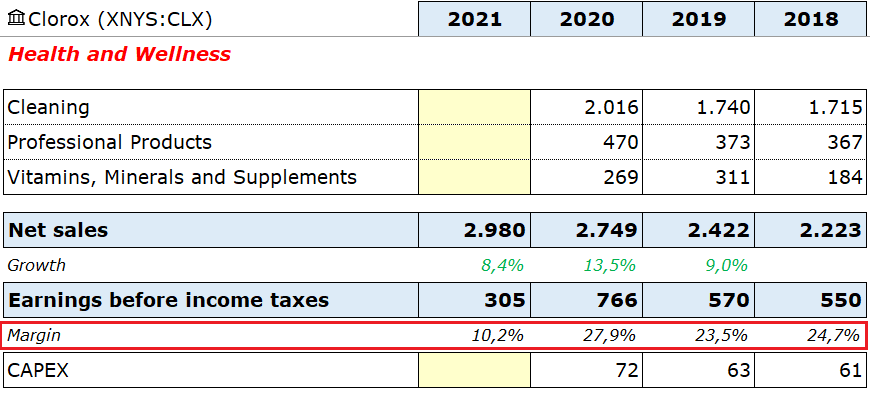
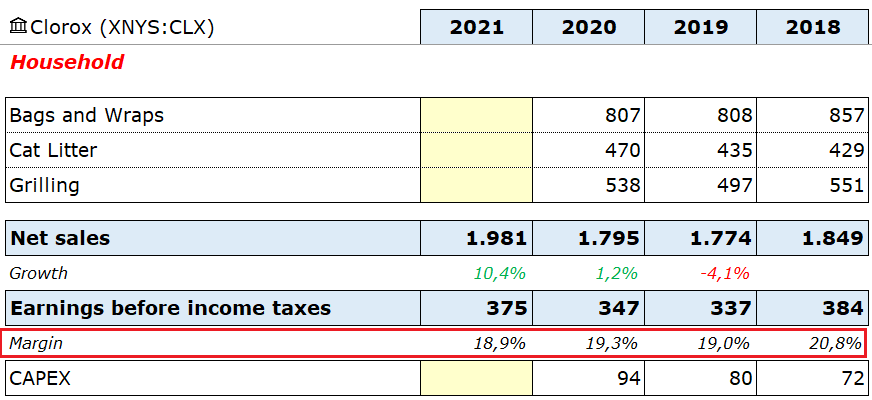
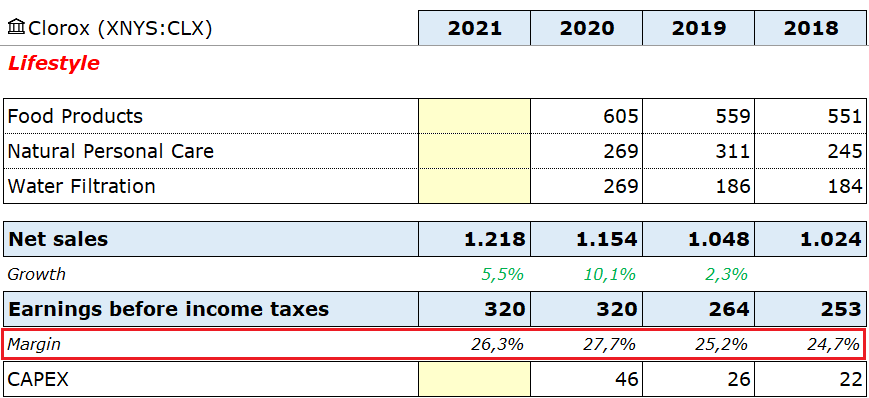
De que suban las cuentas anuales correspondientes al ejercicio fiscal del 2021 actualizaré los datos que me faltan en las tablas. Mientras tanto, adjunto por divisiones los márgenes EBIT que tiene la compañía:
-Salud y bienestar:
-Familiar:
-Estilo de vida:
-Internacional:
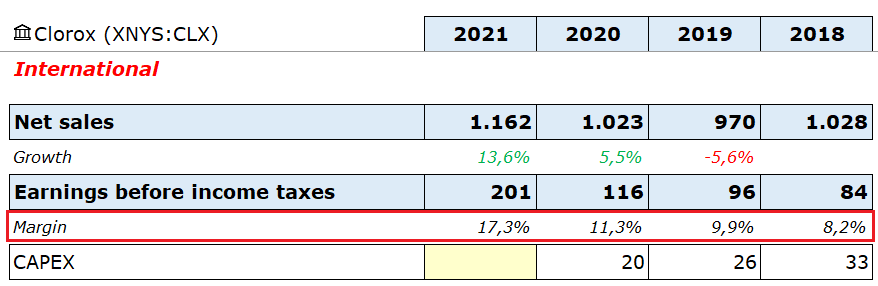
Pueden verse los crecimientos tanto en ventas como en EBIT de las divisiones también.
CIRCUITOS ELECTRÓNICOS ESPECIALES PARA EL AEROMODELISMO • Re: Pérdida de señal en modelos eléctricos
Un vídeo muy ilustrativo Guille! Gracias por currártelo y compartirlo.
Estadísticas: Publicado por Capitán_Pattex — Lun, 16 Ago 2021 10:23
Categorías: Modelismo y CNC en español
Odón Elorza (PSOE), a Iberdrola: “Os disfrazáis de empresa verde mientras vaciáis embalses para hacer caja”
El diputado socialista en el Congreso y exalcalde de San Sebastián, Odón Elorza, acusó este sábado a la compañía eléctrica Iberdrola de disfrazarse de “empresa verde” mientras vacía ”embalses para hacer caja”, así como de “usar” al excomisario Villarejo. En un tuit difundido en su cuenta personal, el político vasco criticó a Iberdrola en estos […]
La entrada Odón Elorza (PSOE), a Iberdrola: “Os disfrazáis de empresa verde mientras vaciáis embalses para hacer caja” se publicó primero en {DF} DiarioFinanciero.
Categorías: 1 Noticias economicas en español
Gestha pide revisar el modelo fiscal autonómico “cuanto antes” y dotarlo “de cierta armonización”
El presidente de los Técnicos del Ministerio de Hacienda (Gestha), Carlos Cuadrado, considera necesario que se aborde la revisión del modelo de financiación autonómica “cuanto antes” y reivindica su apuesta por dotarlo de “cierta armonización”. En declaraciones a Servimedia, Cuadrado indicó que se trata de un tema “que está pendiente desde hace años” y, aunque […]
La entrada Gestha pide revisar el modelo fiscal autonómico “cuanto antes” y dotarlo “de cierta armonización” se publicó primero en {DF} DiarioFinanciero.
Categorías: 1 Noticias economicas en español
How Factor Investing Works
How Factor Investing Works
Why do investments perform the way they do? This is a question many investment experts have been attempting to answer for years. Luckily, factor investing can provide investors with a data-driven understanding.
In this infographic from MSCI, Visual Capitalist's Jenna Ross uses scenarios from everyday life to explain how factor investing works.
What is Factor Investing?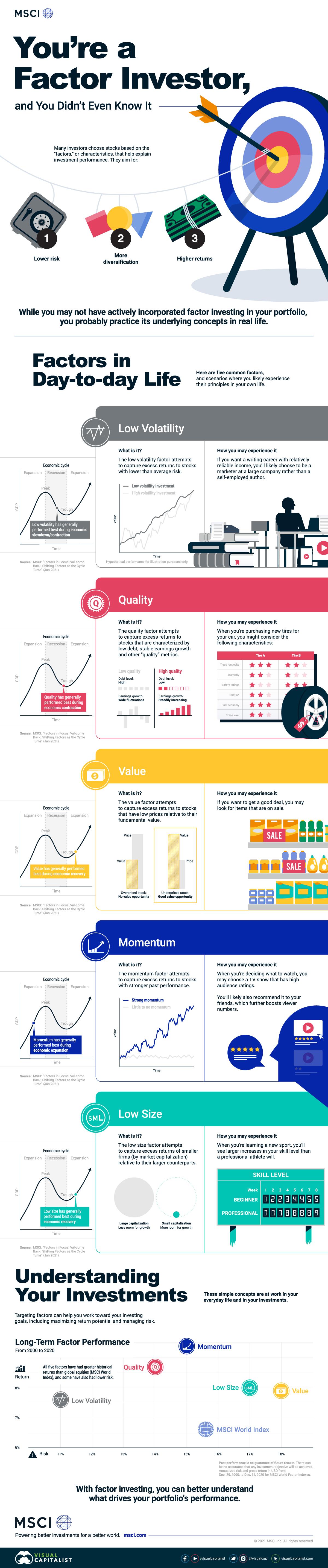
Simply put, investors choose stocks based on the “factors”, or characteristics, that help explain investment performance. They are typically aiming for:
- Higher returns
- Lower risk
- More diversification
While you may not have actively incorporated factor investing in your current portfolio, almost everyone will be familiar with the underlying concepts in real life. Here are five common factors and scenarios where you likely experience their principles.
1. Low Volatility FactorThe low volatility factor attempts to capture excess returns to stocks with lower than average risk. This factor has generally performed best during economic slowdowns or contractions.
How you may experience it: If you want a writing career with relatively reliable income, you’ll likely choose to be a marketer at a large company rather than a self-employed author.
2. Quality FactorThe quality factor attempts to capture excess returns in shares of companies that are characterized by low debt, stable earnings growth, and other “quality” metrics. This factor has generally performed best during economic contractions.
How you may experience it: When you’re purchasing new tires for your car, you might consider characteristics like tread longevity, traction, and fuel economy.
3. Value FactorThe value factor attempts to capture excess returns to stocks that have low prices relative to their fundamental value. This factor has generally performed best during economic recoveries.
How you may experience it: If you want a good deal, you may look for items that are on sale.
4. Momentum FactorThe momentum factor attempts to capture excess returns to stocks with stronger past performance. It has generally performed best during economic expansions.
How you may experience it: When you’re deciding what to watch, you may choose a TV show that has high audience ratings. You’ll likely also recommend it to your friends, which further boosts viewer numbers.
5. Low Size FactorThe low size factor attempts to capture excess returns of smaller firms (by market capitalization) relative to their larger counterparts. It has generally performed best during economic recoveries.
How you may experience it: When you’re learning a new sport, you’ll see larger increases in your skill level than a professional athlete will.
Understanding Your Investments With Factor InvestingThese simple concepts are at work in your everyday life and in your investments. Targeting these factors can help you meet your investing goals, including maximizing return potential and managing risk.
From 2000 to 2020, here’s how the risk and return of the above factors compared to the benchmark MSCI World Index.
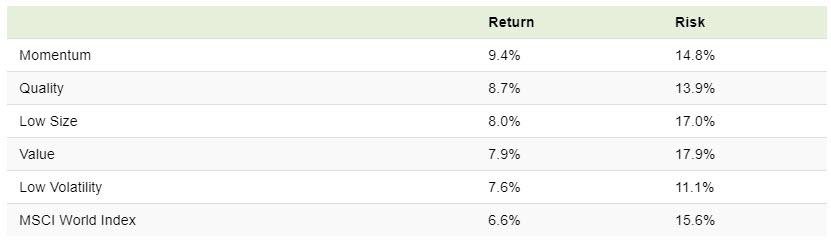
Annualized risk and gross returns in USD from December 29 2000 to December 31 2020 for MSCI World Factor Indexes.
All five of the factors have had greater historical returns than the benchmark index, and some have also had lower risk.
With factor investing, you can better understand what drives your portfolio’s performance.
Tyler Durden Mon, 08/16/2021 - 04:15
Categorías: Blogs y opiniones de economia en ingles
El precio de la luz se toma un respiro y este lunes baja de los 90 euros/MWh
El precio medio de la luz en el mercado mayorista se tomará un respiro este lunes, 16 de agosto, y bajará por tercer día consecutivo, hasta un precio medio de 88,92 euros el megavatio hora (MWh), frente a los 110,02 euros de este domingo (-19,18%). Con este descenso, el precio de la luz baja de […]
La entrada El precio de la luz se toma un respiro y este lunes baja de los 90 euros/MWh se publicó primero en {DF} DiarioFinanciero.
Categorías: 1 Noticias economicas en español
Grifols obtiene el apoyo mayoritario de sus tenedores de bonos y deuda para su acuerdo con GIC
Noticias bolsa España -
La farmacéutica ha anunciado este lunes que ha conseguido el 90% del respaldo mayoritario de sus tenedores de bonos y deuda para llevar a cabo su acuerdo con el fondo soberano de Singapur, el GSIC con el objetivo de reducir su deuda y su apalancamiento financiero.
Categorías: Blogs y opiniones de economia en español
Bruselas considera que OMC es la “única vía aceptable” para resolver el conflicto de EEUU por la tasa Google frente a las represalias
La Comisión Europea considera que la vía jurisdiccional en el marco de solución de diferencias en la Organización Mundial del Comercio “es la única vía aceptable para denunciar la supuesta discriminación percibida por los Estados Unidos” con la aprobación de la llamada ‘tasa Google’ en España y situaciones similares en países como Italia, Austria o […]
La entrada Bruselas considera que OMC es la “única vía aceptable” para resolver el conflicto de EEUU por la tasa Google frente a las represalias se publicó primero en {DF} DiarioFinanciero.
Categorías: 1 Noticias economicas en español
La industria eleva su facturación un 19% en junio y suma cuatro meses de ascensos
La cifra de negocios de la industria subió un 19% en junio respecto al mismo mes de 2020, tasa que se ha moderado en más de 26 puntos respecto a la de mayo y en casi 50 puntos respecto abril, cuando se registró el mayor repunte de toda la serie histórica, según datos difundidos este […]
La entrada La industria eleva su facturación un 19% en junio y suma cuatro meses de ascensos se publicó primero en {DF} DiarioFinanciero.
Categorías: 1 Noticias economicas en español
Fall is cancelled. Here are 9 things to get you excited about staying at home
This fall was supposed to be spectacular. After a year and a half of dealing with the trauma, anxiety, and exhaustion of the pandemic, the vaccines arrived, and it seemed like normalcy was around the corner. I was planning to throw house parties and enormous dinner gatherings to catch up with friends, and host Halloween and Thanksgiving shindigs. But the highly transmissible delta variant changed all of that.
With COVID-19 cases surging around the country, many of us are headed back indoors with our pod-mates. It’s a depressing thought. But to make it (slightly) more bearable, why not invest in a few things to liven up your home? We’ve selected some of our favorite design-forward home goods to inspire you as you spruce up your living space for the months to come.
A Splash of Color for Your WallsRonan Bouroullec is a celebrated furniture designer who is also known for beautiful abstract paintings. This one, featured in MoMA’s collection, is bound to put a smile on your face with its burst of colors. MoMA Design Store sells a print on embossed paper, which mimics the artist’s technique of using felt-tip pens on glossy paper. You won’t have to go through the trouble of framing it, because it comes in a wax oak molding and Plexiglass.
Make Your Own ArtworkIf the Bouroullec painting got your creative juices flowing, maybe it’s time to make some abstract art of your own. These Doodle Crayons were developed by artist and designer Nikolas Bentel, who loves helping people reimagine everyday objects. The shape of the crayons spur you to use them in different ways—by pulling them along their sides or pushing them around flat. Then proudly display your scribbles and doodles on your fridge or walls.
A Rug With Many LivesIf you’re looking for a touch of warmth in your home, consider updating your rugs. Rather than buying a brand-new, factory-made one, you could get a vintage rug that has had many lives. Revival Rugs curates vintage rugs from around the world then cleans and refurbishes them. This particular one-of-a-kind rug was made in Malatya, Turkey, and it features geometric patterns that are unique to that region. The company allows you to search for a rug by size and color, so you can find one that is perfectly suited to your space.
Turn Your Bathroom Into a MuseumWe start and end our days in the bathroom. Shouldn’t it be a gorgeous spot in the house? Design Milk has a range of bathroom products, from shower curtains to bath rugs, that feature modern art. I’m particularly taken by this one, called the Mendocino Moon Jelly rug, because it is inspired by the quiet town in California known for its beautiful mountain views. It’s designed in the Turkish kilim style and is made from quick-drying cotton.
Take In The LightAs the days get darker, you’ll want to brighten up your home. This meditative lamp, called the Reflection Oblo Table Lamp, was designed by David Weeks, an industrial designer from New York, and features a mouth-blown bulb and a base made of semi-translucent, hand-thrown porcelain that has a reflective glaze for enhancing the bulb’s light.
A Throw Blanket To Regale The EyesIf you’re in the market for a throw blanket as the cooler months arrive, you might consider this lively, colorful one by the Japanese designer Osamu Mita. It’s inspired by Japanese vending machines that dispense capsules full of surprise toys. There are 15 patterns on display, each inside a circle meant to represent a toy capsule. Mita’s art has been featured in MoMA’s collection and these particular designs were part of a 1998 exhibit, Structure and Surface: Contemporary Japanese Textiles.
Give Your Pandemic Puppy A Designer BedYou got a furry friend to help you get through the pandemic. As the two of you spend more time indoors, why not create a designer sanctuary for the little guy with this beautiful pet bed? The Penny Dog Bed is made by pedal loom weavers in San Antonio Palopó, Guatamala, and features striped fabric in a range of colors that will spruce up a room. If you don’t have a pet but you love the product, buy it anyway: It doubles as a floor pillow.
Splurge On Your Cozy CornerIf you’re going to spend a lot of time reading a book in a cozy corner of your home, you could do worse than this beautifully crafted full-grain leather chair that will last a lifetime. The Heyday Lounge Chair, designed by Blu Dot, is meant to make you feel like you’re suspended in mid-air. Bonus: The chair ships fully assembled.
A Broom You Can Believe InYou might think there’s nothing duller than a broom. But that’s because you haven’t explored the universe of artisanal brooms. These Rainbow Brooms are by designer Cynthia Main, who wanted to create home goods inspired by traditional Appalachian crafts. Each broom is sustainably made in Berea, Kentucky, and the brooms are hand woven from locally sourced wood. They’ll bring a smile to your face as you’re going about your chores and sweeping your home.
Categorías: 3 Noticias economicas ingles
There are now lab-grown mouse-meat cookies for cats
If you want to try some, cultured meat still isn’t easy to find: So far, only one form of cultured chicken has regulatory approval, and only in Singapore. But more is coming, and your pets won’t have to wait long either. Soon there will be cultured meat for pet food, which could help cut the 64 million tons of carbon pollution that comes from producing meat for dog and cat food.
The biotech startup Because, Animals is the first to focus on pet food, and hopes to launch its first products—including a “mouse cookie” snack for cats—by 2022. “The ultimate goal of most cultured meat companies is to create a product that will allow animals to be taken out of the food supply chain,” Shannon Falconer, CEO and cofounder of Because, Animals, said in an email. “And, given that humans are the largest consumers of traditional meat, it makes sense to focus on humans when making a cultured meat product. However, something that most people are unaware of is that, in addition to humans, there is another hugely significant population driving the animal agriculture industry forward: our pets.”
More than a quarter of the environmental impact of animal agriculture, by one estimate, comes from feeding pets meat. Pet food often uses rendered meat, the grisly ingredients that people don’t want (like viscera, heads, bones, and blood) or meat that can’t legally be sold because the livestock was diseased or dying. The volume of this rendered meat is so large that if farmers couldn’t sell it, they couldn’t afford to dispose of it as biohazardous waste; Falconer argues that pet food helps prop up the entire industry.
While some companies make plant-based pet food, dogs and cats are arguably healthier when they eat meat, particularly cats, which need certain proteins that can only be found in meat. When the startup started product development for its first cat food, it decided to begin not with beef or chicken but mouse. “Cats evolved as predatory animals, with their food sources being mice, rats, rabbits, lizards, and insects,” says Falconer. “Although chicken, beef, and fish are the main sources of meat in pet foods, studies have shown that these proteins are also among the leading food allergens in cats and dogs.” The only reason that these meats are used in pet food, she says, is because they’re already being produced for humans.
The first snack, called Cultured Mouse Cookies for Cats, has been tested by cats and is ready for production, though the company is still working on how to fully scale up its process. Like cultured meat under development for humans, the process starts by harvesting cells from an animal—in this case, a mouse (the mouse isn’t harmed)—and then feeding those cells nutrients inside a bioreactor, where they grow and turn into real meat that is animal-free. Cultured rabbit for dogs will come next.
The final challenge, as with cultured meat for humans, is regulatory approval. “Regulatory approval will look different depending on the country,” Falconer says. “But the fundamental question that any and every regulatory authority will ask is: How do we know it’s safe? There isn’t a single experiment that Because, Animals conducts that doesn’t place the health and safety of our cultured meat as our highest priority. We’re incredibly thorough, so we don’t expect to have any hiccups around regulatory approval aside from the inherently lengthy review process.”
Categorías: 3 Noticias economicas ingles
Can an app be medicine? These companies think so
Software applications—apps—drive everything about how we function in the world. But can apps function as medicine? Can they treat our health problems, or better yet, prevent them?
An organization founded in 2017 called the Digital Therapeutics Alliance believes that software can prevent, treat, and manage a range of health issues. And now its members, armed with stacks of peer reviewed papers, are trying to get the government to write legislation that creates a pathway for their success.
“Think of us as a digital drug,” says Big Health founder Peter Hames. The company has two mobile apps, Daylight, which treats anxiety, and Sleepio, which treats insomnia. The apps deliver cognitive behavioral therapy, a skills based therapy that, through a virtual professor, teaches you techniques for falling asleep and mitigating anxiety. It also asks users to log progress through a sleep diary. This level of data collection allows Big Health to document whether or not its app is working.
Together, the two apps have been the subject of 56 peer-reviewed clinical papers, of which 13 included randomized controlled trials, involving 13,000 participants. There is fairly thorough data supporting their usefulness, because the effects of apps—just like drugs—can be measured and validated. “More participants have taken part in controlled studies of Sleepio, our insomnia therapeutic, than have ever taken part in studies of Ambien,” says Hames.
In general, digital therapeutics tend to take a lifestyle approach to illness, teaching patients how to manage health problems ranging from chronic pain and diabetes to anxiety. The Digital Therapeutics Alliance has 59 member companies, including pharmaceutical giant Boehringer Ingelheim. In the last few years, it’s seen growing investment from venture capital. In 2015, the category attracted $134.3 million in venture funding, but by 2019, digital therapeutics had cleared $1.2 billion worth of deals, according to Pitchbook data. Pitchbook’s analysts estimate that digital therapeutics will be worth $6.9 billion by 2025.
“Through data we’re tying to make sure users are more engaged, retained, and eventually help them improve clinical outcomes,” says Erez Raphael, CEO of DarioHealth. “Further, we have the data to prove the clinical outcomes.” Part of why these interventions are successful is because they make keeping up with healthcare regimens much easier. The apps not only allow members to track their own progress, but often feature other accountability measures, like check-ins with a coach—all of which can be done from home.
Ostensibly, any kind of treatment proven to treat sleeplessness or reduce anxiety should be prescribable and covered by health insurance. Some major insurers do cover Sleepio (the company also has a deal with CVS/Caremark and the National Health Service in the U.K). However, other digital therapeutics companies are still struggling to be accepted for insurance reimbursement. Many digital therapeutics provide treatment for on-going conditions, which are not always easily reimbursable under fee-for-service insurance models.
For instance, DarioHealth uses a digital platform combined with coaches and sometimes medical devices to treat diabetes, hypertension, weight loss, and musculoskeletal issues. Part of the issue the company encounters with insurers is that there aren’t corresponding insurance billing codes for the kinds of services its digital therapeutics provide. Instead, it has also worked out deals wherein its 185,000 users can be reimbursed for Dario’s medical devices, like it’s glucometer. It primarily sells its program to patients directly and employers as an employee health benefit.
“The biggest hurdle that we have right now is that [Center for Medicaid and Medicare Services] has yet to define a benefit category for software as a medical device,” says Therapeutic Alliance CEO Andy Molnar. While CMS does not dictate what insurers will and will not reimburse for, it sets the standard because it is the largest payer in the country. Typically, insurers cover drugs and healthcare services provided by doctors. Digital therapeutics don’t fall into either of those categories.
There are signs that CMS may be embracing digital therapeutics soon. In January, CMS finalized a rule called the Medicare Coverage of Innovative Technology, which would make technologies with a breakthrough status from the Food and Drug Administration eligible for reimbursement under Medicare for four years. However, implementation of that rule has been delayed until at least December 15, to give the Biden administration an opportunity to review and amend it. MCIT currently doesn’t address digital therapeutics directly, but it does reimburse for medical equipment, often a component of digital therapeutics.
In addition to MCIT, a bill introduced last year may create a stronger pathway to reimbursement for digital therapeutics. The Prescription Digital Therapeutics to Support Recovery Act would ensure Medicare and Medicaid cover prescription digital therapeutics that render behavioral health services, including programs that address mental health disorders and substance abuse. If it is eventually passed, this bill would create a benefit category for digital therapeutics, as Molnar described.
Other countries have already taken steps to make sure that patients have easy access to digital therapeutics and telemedicine. In 2019, Germany passed The Act to Improve Healthcare Provision Through Digitalization and Innovation, so that healthcare apps could be covered by insurance. That same year, the U.K.’s National Institute for Health and Care Excellence published guidance for digital therapies on how to gain acceptance by the NHS.
Raphael is encouraged by the progress. “It’s a much more modern way for people to manage their health.”
Categorías: 3 Noticias economicas ingles
This is how to truly unlock your creativity
“No one in his or her right mind would argue that quantity guarantees quality,” bestselling novelist Stephen King wrote, “but to suggest that quantity never produces quality strikes me as snobbish, inane, and demonstrably untrue.”
Many of the people we think of as the most creative in history had staggeringly prolific levels of output in their careers. Charles Darwin published around 120 scholarly papers, Albert Einstein published around 250 papers, and Sigmund Freud published 330 papers. Thomas Edison held nearly 2,000 patents on his inventions. Johann Sebastian Bach composed more than 1,000 musical pieces, and Pablo Picasso is credited with more than 20,000 paintings, sculptures, and drawings.
In the journal writing challenge set by my own seventh-grade teacher, my classmates all commented that it helped them become less self- conscious. Furthermore, even those who had previously hated writing started to enjoy it. For me, it acted like a creativity release valve. Perpetually dogged by perfectionism, I found that the new stakes finally loosened me up.
Without the fear of judgment, I spontaneously produced poems, songs, and short stories. Boosting the quantity of your output could help you become more creative, as we discussed above. A positive, elevated, and open mood also seems to disinhibit and allow for more ideas to come. In this state, you are unhindered by internal criticism.
Lest you think that creativity is all about being in a good mood and just waiting for magic, it’s clear that the emotional recipe for creativity is, well, not fully clear. Emotional intensity and even ambivalence seem to play a role in creativity, too. Researchers used to believe that positive moods led to creativity, but recent research has revealed a messier truth. High-intensity feelings, even if they are negative, can lead to completing a set goal, whereas low-intensity feelings, again, even if they are negative, enable us to think more broadly, more diffusely—the kind of thinking necessary to shift perspective and “see the big picture.”
Expertise matters, too. Two of the criteria for creativity are novelty and usefulness. If you know nothing about a field, you might get lucky and produce a few creative ideas (especially if you are expert in another area and are transferring your skills from there), but how can you know what is useful or novel in this new area without expertise? Being at the right challenge for your skill level is key.
In short, the idea is practicing a lot, being in the right mood—and more the magnitude than whether you’re happy or sad—and don’t forget you need to have a level of expertise in that area, of course. All of these will affect your creativity.
Where creativity lives in the brainEver heard that the right brain is creative and the left brain is logical? Sorry to be the bearer of bad news, but recent brain imaging data has debunked that idea. The old idea seems to have come from language centers being in the left hemisphere and spatial abilities being in the right, but recent findings show a far more complex and interesting picture.
Recent studies of people lying in brain scanners and performing tasks requiring creativity or creative thinking showed that they tended to engage not just one part (say, the right or left hemisphere of the brain) but multiple large-scale brain networks that run through the frontal area, the temporal lobes, and the limbic system. This could be seen not just in randomly selected people, but also in people who are indisputably creative, such as freestyle rappers and jazz improvisers.
Why increase your creativity?There are many reasons why interventions designed to boost your creativity might be worth pursuing. First of all, creativity brings a special kind of focused joy: flow. Flow, also known as being “in the zone” or being immersed, fully absorbed in a feeling of energized focus, is an inherently pleasurable experience. It’s common when in the throes of creativity. Many artists, scientists, and performers report that they lose track of time and lose any sense of themselves when they are immersed in their craft.
Second, creativity may lead to interesting careers. In the 21st century, we are going to need a lot of innovative solutions for everything from climate change to how we should try to coexist with AI. Not to mention how to bridge the widening gap between rich and poor, how to make our food sup- ply chains more sustainable, or how to travel to other planets. If you want to be part of solving these problems—some of which may involve lucrative career paths—you may want to boost your creativity.
Creativity also offers the possibility of personal glory and immortality. If you want fame or fortune now, doing the same things as everyone else but faster and more reliably could be your ticket. If you want to be remembered forever, however, creativity is the path to get there. Maybe when you unlock more of your creativity you will become the next Coco Chanel, Edison, Marie Curie, Ludwig van Beethoven, or Fyodor Dostoyevsky. Your art could be in museums, your music could be played on everyone’s devices, your company could be publicly traded, your cure for a disease could save millions, and your inventions could be sold in stores everywhere.
Elizabeth R. Ricker is the author of Smarter Tomorrow: How 15 Minutes of Neurohacking a Day Can Help You Work Better, Think Faster, and Get More Done. She received her undergraduate degree from MIT and holds a master’s from Harvard University studying the mind, brain, and education.
Excerpted from Smarter Tomorrow. Copyright © 2021 by Elizabeth R. Ricker. Used with permission of Little, Brown Spark, an imprint of Little, Brown and Company. New York, NY. All rights reserved.
Categorías: 3 Noticias economicas ingles
La producción industrial china avanza un 6,4% en julio, por debajo de las previsiones
La producción industrial de China creció un 6,4% interanual en julio, por debajo de las previsiones de los analistas -que esperaban un 7,8%-, y frente al avance del 8,3% de junio. Leer
Categorías: 1 Noticias economicas en español
¿Eliminamos los fondos mixtos de la cartera?
Gracias @Toti por volver a hacer las cuentas y compartirlo aquí
Toti:En este caso concreto cubrir empeora sustancialmente los resultados
Probablemente sea pq el USD haya actuado como refugio en las caídas en RV. Lo que no quiere decir que tenga que ser siempre así.
También es curioso que la diferencia de rentabilidad, DD y tiempo underwater entre PC y PW cuando gran parte de la cartera es igual y hay gestores comunes. Si no estoy confundido, el PC es un PW al que han quitado midcap y añadido RF Corporativa (principalmente HY).
Laboratorios Almirall brilla hoy en el Ibex gracias a su medicamento Lebrikizumab
Esta mañana la compañía comunicó a la CNMV los buenos resultados de dos ensayos contra la dermatitis atópica.
Categorías: 1 Noticias economicas en español
Todo apunta a que el Ibex comenzará la semana por debajo de los 9.000 puntos
8.999,80 fue el cierre semanal del selectivo español y los futuros anuncian una apertura algo por debajo
Categorías: 1 Noticias economicas en español
Azvalor vs Cobas
Totalmente. Esto es clave. Yo desde mi ignorancia me planteo una cosa con cobas en particular.
El otro día estaba leyendo el newsletter de agosto. Según ellos la cartera está a per 8.
A qué per estaba en marzo de 2017? A per 8…
Es decir después de casi 5 años seguimos con el mismo per.
Si el análisis hubiera sido más correcto el per habría ido bajando a medida que esas empresas infravaloradas seguian con sus beneficios cada año. Por no hablar de que el vl esta a un 20 por ciento por debajo. Yo creo que si el análisis hubiera sido el correcto debería estar a per 4 o 5
Es decir que las compañías han ido perdiendo beneficios año tras año. Y eso se ve fácil hasta para novatos como yo. Vas a morningstar te metes en babcock o en dixons o en renault y los últimos tres aňos los beneficios han caído a saco. De aryzta no hablamos. Os acordáis de renault que allende la valoraba a 125 desde 75.?
Y esto se puede mirar con cobas porque con azvalor con el trading que hacen no hay forma.
En mi opinión se les ha juntado un periodo nefasto paaa el value con un análisis pésimo de las compañías
En referencia a lo que decía estructurero de 2008 fíjese que en lo peor de la crisis valoraban la cartera a per 2 o 3… Vale vienes de 8 o9 caes un 65 y te quedas en 2 o 3. Pero es que aquí después def 5 años y estar con la misma cartera la valoración actual demuestra que las compañías lo han hecho muy mal ya que el per está igual…
"The Clorox Company", tesis de inversión.
inversionautodidacta:
Comentado esto quería hacerle alguna pregunta teorica sobre conceptos del analisis, me gustaría conocer su opinión. En el calculo del ROCE, he visto que se puede hacer dividiendo ebit entre los activos - pasivos corrientes, o tambien recursos propios + mas deuda ¿entiende alguna opción es mejor que otra?"
Influye la estructura de capital de la empresa a la hora de calcularlo, puesto que es más fácil dependiendo de como sea. Se puede realizar de diferentes maneras.
Le pongo el ejemplo de inditex que parte desde el equity:
Le muestro ahora el cálculo del capital empleado:
Al tener caja neta y no tener deuda, al final la parte empleada por la empresa es únicamente el equity que pusieron los accionistas o han decidido dejar.
En el caso de Clorox partí desde el total de activos y fui restando los pasivos corrientes. Por el contrario en Inditex, directamente partí desde los fondos propios dado que es mucho más rápido al no haber deuda.
Se puede llegar al mismo resultado desde ambos lados dado que el activo siempre es la suma del pasivo y del patrimonio neto. Es un suma 0.
Páginas


Custom Search